Showing posts with label Italy. Show all posts

Tuesday, December 23, 2014

Margaret Mackenzies Tea Rooms in Florence


Found in a Tauchnitz edition of Barry Pain's Stories in Grey (Leipzig 1912) this bookmark advertising an English tea room in Florence at 5 Piazza Strozzi. It served 'Light Luncheons, Home Made Bread' with 'Best Teas on sale as used in Tea Room.' It also provided  English and American newspapers, a telephone and 'Writing Tables for use of customers' and may have flourished around 1920. The internet shows no trace of Miss Mackenzie's possibly short lived enterprise. Contemporary Baedeker's may mention it...The only clue is that the address was slightly later that of a publisher T de Marinis & Co who in 1925 published a book of  reproductions of illuminated manuscripts with English text. It was published jointly  with Bernard Quaritch of London. 

Thursday, August 7, 2014

Baja, the ancient Baiæ - worth a detour?


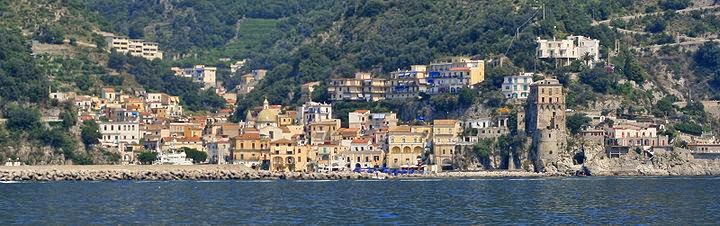
Found in Baedeker's Guide to Southern Italy and Sicily ((9th Ed., Leipzig 1887) a loose flyer/2 sided handout, entitled To Tourists. Baedeker's are often a repository of travel ephemera and this one yielded an opera ticket for the Metropolitana in Siena and a map of Naples supplied by the grand looking Parker's Hotel, also a dinner menu that notes the hotel had formerly been known as the Tramontano*. The leaflet, in perfect English and by one GPB, attempts to lure visitors to the ancient town of Baiae (now known as Baja.) Baedeker is rather dismissive of it (see below) so it may have needed some publicising. The leaflet reads thus:

It is particularly urged on visitors that they should not omit the district west of Naples from their programme. Baiæ was recognised by the court of Imperial Rome as the most beautiful spot on the Italian shore; it is not now less beautiful, and the gigantic ruins (so called "Temples") stand among its green vineyards to record the luxury of ancient fashion. Beyond, towards the Capo Miseno (where Virgil tells the Æneas buried his trumpeter Misenus) is the Piscina Mirabile, one of the greatest and most complete monuments of roman engineering still left to us, the gigantic reservoir which held the water for the fleet in the naval harbour below. (It will be remembered that Pliny the Elder was here with his fleet at the time of the great eruption of Vesuvius, and from here set sail to meet his death at Pompeii). Further still are the beautiful islands of Procida (from which, perhaps, the most perfect of all views of Naples Bay is to be obtained) and Ischia, wild and picturesque in the extreme. Cumæ, the remains of a Greek city, some 3000 years old, offers perhaps little except to the archaeologist; but the ancient paved road from Cumæ leads towards Naples under the Arco Felice, the still intact aqueduct which carried to the Naval Reservoir pure water from the Apennines 40 miles away. Between this road and Baiæ lies the famous Lake Avernus recognised for a thousand years as the true mouth of hell. It is now a peaceful lake, but near it the so-called 'Baths of Nero', with their winding underground passages, hot caverns and subterranean streams, may make the modern tourist not altogether incredulous of the earlier belief.

Al this district, the Phlegræan Fields of the ancients, is rent by eruption and pitted with volcanic craters. Most celebrated of these is perhaps the Monte Nuovo, between Lake Avernus and Pozzuoli, a volcano 450 feet high, which arose in a few days, some say a single night, A. D. 1538.

Tuesday, April 23, 2013

Herbert Horne (1855 - 1916)

An article from the long defunct Anglo - Italian Review, October 1918. Edited by Edward Hutton, an English  Italophile who wrote several Italian travel books and featuring articles by Nobel Prize winner Grazia Deledda, Norman Douglas & Benedetto Croce. This piece is by the novelist Reginal Turner and is an affectionate tribute to his friend Herbert Horne - art historian, art dealer, architect, typographer and Arts and Craft movement designer. The photo below is of him with his friend and colleague the architect  A.H. Mackmurdo (standing) and an older woman, possibly AHM's mother at a house ('Brooklyn') in Enfield. The story of Horne finding  two Michelangelo drawings for a penny each in the Fulham Road is hard to top...


HERBERT PERCY HORNE, who died in Florence
in May, 1916, belonged to the numerous band of
interesting Englishmen who made Italy their home,
and the memory of whose sojourns there does not
pass with their death. He did not found a family
there as did Walter Savage Landor. He took no
part in public life as did Waddington, who went
casually to Perugia and remained there to become
Syndic. It may even be said that to the majority
of Italians as to Englishmen his name was unknown.
He had an almost morbid love of retirement ;
those who knew him well could not but be amazed
at his slight suspicion--there is no other word-
of hospitality. Yet Herbert Horne was known to
a large circle which included some of the best-known
and ‘many of the most talked about of his contem-
poraries: most of them loved him, all of them
respected him, and he was recognised by them as one
of the most learned, one of the wisest, and one of the
most reliable men of his time.

Horne was indeed a “ character,” a very rare
personality, full of magnetism, yet lacking the
desire or the power of spreading it over a wide area.
It is seldom perhaps that a man of such a solid
reputation as he had among those who knew him
has been so little known to the general public, for
he .lived in an age when more things were known
about eminent people than they knew about them-
selves. He had to a peculiar extent the power to
“ pass in a crowd ” ; it was more peculiar in him that
he desired to do so; and the crowd remained quite
unaware of the stir he created among his friends
and those acquaintances with whom his learning
brought him in contact.