Showing posts with label Victoriana. Show all posts

Wednesday, October 14, 2015

1846 Diary of J.W.Penfold—inventor of the octagonal pillar box


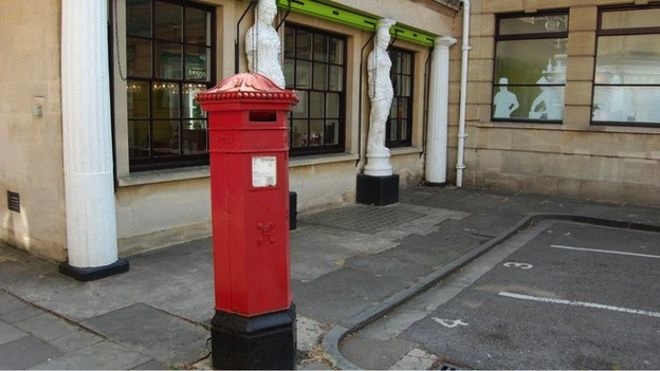
Any Jotters who in their childhood tuned into Danger Mouse, which is about to be revived, must know that his sidekick was called Penfold. It would seem that this character was named after the Victorian architect John Wornham Penfold (1828 - 1909), who is perhaps best known today as the inventor of the octagonal pillar box, several examples of which can still be found in Cheltenham.

But here we have a copy of the Punch Pocket Book for 1846 (discovered many years ago in an antique shop) that once belonged to the future architect and designer, then aged just eighteen, while he was working as a lowly assistant draughtsman in the London office of the renowned architect and illustrator Thomas Talbot Bury (1809 -1877) and his partner Charles Lee (1803 – 1880). At this time Penfold’s duties were various,

Tuesday, April 28, 2015

A Ship's Library - Kinfauns Castle

Kinfauns Castle
(Ship's Nostalgia site)
Found - a list of the entire inventory of a ship's library - Donald Currie & Co's Royal Mail Steamer "Kinfauns Castle"(South African Service). An interesting list, possibly intended to be comprehensive. There is a curious amount of William Black, then at his height, a sort of Victorian Dan Brown (so popular that in America his works were bootlegged.) Likewise there are 3 works of Norman Macleod, editor of the immensely successful Good Words and now so forgotten than he is not even known for being forgotten - although Sutherland covers him well in The Longman Companion to Victorian Fiction. He is  part of a slight Scottish bias to these books (the list was printed by David Bryce & Son, Glasgow.) There is little for children, not many thrillers and not a lot of humour, although Twain and Brett Harte both make the list. Conspicuous by their absence are Trollope, Gibbon, Poe, Milton, Fielding, Wilkie Collins, Swinburne and R.L. Stevenson. Children had to make do with Froggy's Little Brother and possibly German Popular Stories. There is very little religion and no Holy Bible, possibly shipping magnate Donald Currie thought there was enough of that on land or that most people would have a bible if they needed one. The Kinfauns Castle started sailing in 1879 and this is probably from early in its life (it seems to have still been afloat in the late 1920s.) The list was pasted into book 10 Carlyle's Heroes and Hero Worship, attractively bound in full green leather lettered gilt at the spine with the words 'Castle Packets' at the foot -possible all the  library was bound thus..


South African Service

Catalogue of Library 
Donald Currie & co.'s Royal Mail Steamer
"Kinfauns Castle".


A. Becket's Comic History of England, 132.
Adventures of Verdant Green, 165.
Aylwards' The Transvaal of Today, 131.
Baker's Eight Years in Ceylon, 96.
- Nile Tributaries, Abyssinia, 97.
Ballantyne's Lighthouse, 87.
- Erling the Bold, 88.
- Lifeboat, 89.
- Six Months at the Cape, 90.
Black's Green Pastures and Piccadilly, 91. 
- Madcap Violet, 92.
- Adventures of Phaeton, 93.

Wednesday, February 11, 2015

Life and death in a Georgian workhouse ( A real life Mr. Bumble)

Here is a letter picked up years ago in London among a box of ephemera. It is undated, though the watermark is 1821. It is addressed to ‘Mr or Mrs Peacock’:

Mrs Kennion is quite surprised that Mr Peacock should have sent this poor boy to work. He was certainly very ill & ought to be in bed & have medical advice immediately. Mrs K will call at the workhouse about 1 o’clock & hopes that Mr Peacock will have sent for the Parish doctor before that time,that she may hear what he thinks of the child. Mrs K has sent him to Dr Sympson & Mr Richardson, but they are both from home.
Friday. 

A bit of Googling revealed that the action took place in Harrogate, then just beginning on its journey to becoming the most select watering place in the north of England.  In June 1822 Henry  Peacock, formerly the master of Aldborough and Boroughbridge workhouse,  arrived, with his wife Elizabeth, as the master of Harrogate’s workhouse in Starbeck. Evidently aiming to make an impression with the employers by saving money, the couple soon managed to reduce the average cost of keeping a pauper by establishing what was basically a vegetarian diet.

Friday, November 21, 2014

Boozing with the Victorian Society in Crouch End, Hornsey and Harringay


Found in a box of books is this photocopy of a typewritten guide to a ‘pub crawl’ (walk no 41) of various late Victorian ‘gin palaces’ in North London arranged by the Victorian Society on 16th September 1966. The guides were two architects-- Roderick Gradidge and Ben Davis—both of whom had designed interiors for Ind Coope. Judging by their descriptions of the pubs they planned to visit, both were also passionate and knowledgeable fans of late Victorian architecture and design. The grand plasterwork of the ceiling cornices and Art Nouveau stained glass is pointed out as being of special interest. But the two men also emphasised the ways in which Victorian pub architects tried to make   their interiors both glamorous and homely as a way of getting their (mainly) lower middle class drinkers (mention is made of Mr Pooter’s ‘raffish’ friends) to spend hours away from their more humble abodes, much (we might add) in the way that the designers of Music Halls and northern shopping arcades  (one thinks of Frank Matcham ), and grand hotels, were doing in the same era. Here are the guides admiring the combination of grandeur and intimacy found in the Queen’s Hotel, Crouch End (below):
All the way round there were through views, glimpses of the other bars, and as a result one was able to feel that one was standing in one part of a single large space, large enough to tolerate the considerable height without
become vertical. Since the space was so well subdivided…one could feel secluded in a sufficiently small and enclosed space, but since the proportion of the greater space was horizontal a feeling of repose was retained which could not have belonged to tall, restricted vertical rooms.
© Copyright Julian Osley
This method of subdividing an area into small bars by means of partitions, which were half-glazed  with semi-obscured glass, and were not much above six feet high, was peculiar to Victorian pubs, and goes a long way to explaining the incomparable drinking atmosphere they provide... 


Along with the praise of such period interiors and the predictable imprecations cast on alterations by designers from the 1930s onwards, there are several features of the guide that point to its mid-sixties origin. Firstly, the crawl began at ‘6.30’ and ended at closing time.
So no sign of the 24 hour clock here-- presumably so as not to confuse the older topers in the Society, some of whom may have been born when these pubs were being built.-- though I seem to recall that the 24 hour clock had arrived on bus time- tables in the London area as early as 1962.

Wednesday, August 13, 2014

A lost Rossetti letter

Found in the front of an 1866 first edition of Swinburne's  Poems and Ballads (Moxon) this cutting from a catalogue from about 1920. The dealer is unnamed, possibly Maggs or Quaritch, and the catalogue seems to be entirely made up of autograph letters. This is an important letter but does not appear to be recorded anywhere or published. It was possibly bought by a wealthy collector and sits in a drawer in a mansion now owned by his indifferent heirs...the catalogue gives a good taste of it however and it is good on Swinburne and Milnes...Swinburne's book was disowned by the publisher Moxon and scandalised Victorian England by its sensual and decadent themes and lack of respect fro Christianity...

Swinburne by Dante Gabriel Rossetti

Rossetti (Dante Gabriel, 1828-1882). English Painter and Poet. A.L.S. to Frederick Sandys, the painter and book illustrator. 9pp, 8vo. N.D. circa 1857 £15 15s.

A magnificent and very long letter entirely on matters of art and literature. Concerning his own work and severely attacking Monckton Milnes; also prophesying a great career for the poet Swinburne. Mentioning William Morris, Dalziel, Val Prinsep, and others.

"I have not yet got your proofs from Dalziel. I shall value them highly… Your description of Val Prinsep throwing stones into the sea is done to the life… I fear from the tone of your letter that you love not the face of man for the time being…

"My chief work lately has been finishing a whacking big picture - the centrepiece of the Reredos for Llandaff Cathedral of which restored building there was a grand opening the other day. My picture was an 'Adoration'. I forget whether I showed you the beginning of it, but if so it could give you no notion of it in a finished state. It is stuck up in the Cathedral now; but no one saw it before it went, as I was very behindhand at the last moment, and had to paint with locked doors and set teeth. I have finished Rosamund, too, but little else since I saw you. Swinburne is just back from an autumn holiday, spent partly at Monckton Milnes

Wednesday, January 8, 2014

The Daily Mail --The Busy Man’s Daily Journal

Sent in by a loyal jotter and keen accumulator of ephemera and near nonsense. The clue here is that it is the first issue. Surely stuff get's made up at that point...


Check out these Personal ads on the front page of the first issue of the Daily Mail, May 4th 1896. Surely, they can’t be for real. The first and the second read like extracts from late Victorian romantic novels (‘There shall be no reproachful letters; but for heaven’s sake, let me hear of or from you…’ and ‘ if you do not come back to me soon, I fear I shall be tempted into accepting one of the many offers of marriage I am receiving almost daily’ ). Then look at the names attached to the second  ad:‘ To Oak’ from ‘ Ivy’ .  The third ad reads like a Music hall joke.

Uncle Jim---Come home at once. All is forgiven. Bring the pawn tickets with you---Niece

As for the last announcement, this is a neat effort at sardonic humour:

Will the gentleman who took away by mistake the Brown Pony standing outside the Star and Garter on City and Suburban day, kindly send to the same place for the trap, or return pony ? One is no use without the other.

Hurgh hurgh! But back then, the Daily Mail was a light-hearted read for a mere halfpenny, not the tissue of ill-informed opinion that it is today. Along with fashion tips and household hints, it advertised romantic fiction and jolly magazines, announced violin and piano recitals, and even ( horror of horrors ) included an advert for a novel by that dastardly communist Emile Zola !
Those were the days. When did it all go so wrong ?